
Sleep Habits: Do’s and Don’ts for Better Rest
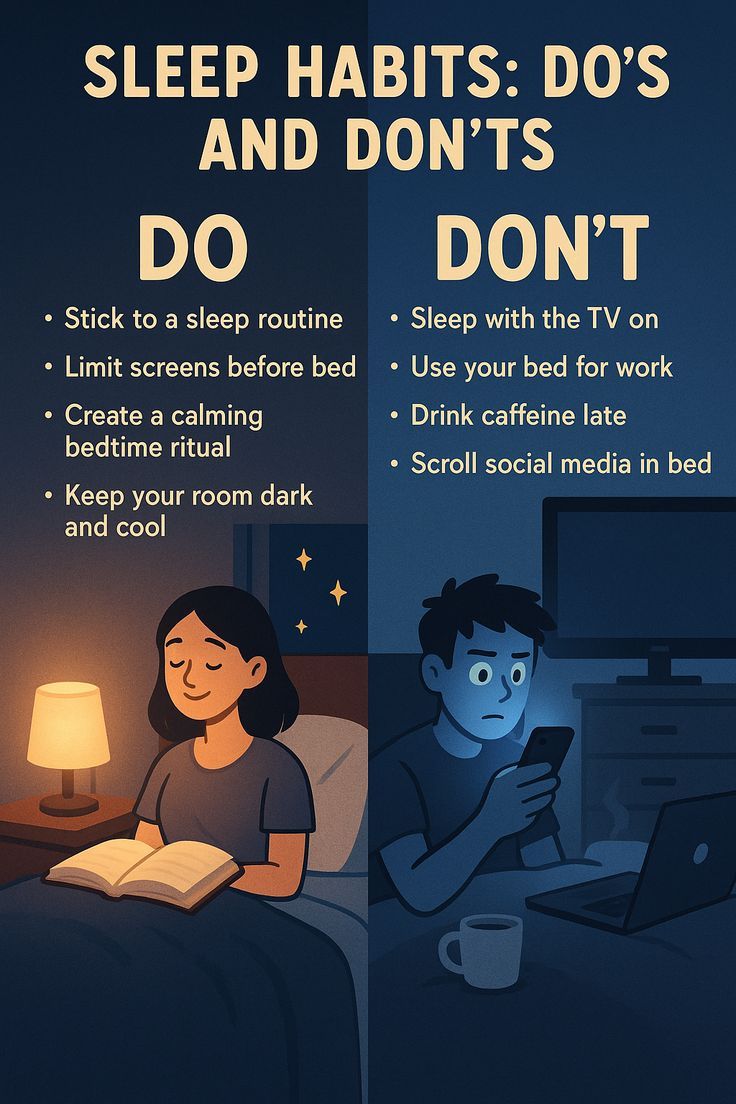
Good sleep is essential for your health, energy, and overall well-being. Building simple habits—like maintaining a consistent sleep schedule, reducing screen time before bed, creating a relaxing nighttime routine, and keeping your room dark and cool—can greatly improve sleep quality. At the same time, avoiding distractions such as TV, late caffeine, working in bed, and social media scrolling helps your mind fully rest. Small, consistent changes in your routine can lead to better sleep and a more productive life.
In today’s fast-paced world, sleep is often treated as optional—but in reality, it’s one of the most important pillars of good health. Quality sleep improves your mood, boosts productivity, strengthens your immune system, and helps your body recover both mentally and physically. The good news? Better sleep isn’t complicated—it starts with simple, consistent habits.
Let’s break down the essential do’s and don’ts of healthy sleep.
✅ The Do’s of Healthy Sleep
1. Stick to a Sleep Routine
Going to bed and waking up at the same time every day helps regulate your body’s internal clock. Consistency trains your brain to recognize when it’s time to rest, making it easier to fall asleep and wake up feeling refreshed.
2. Limit Screen Time Before Bed
Phones, laptops, and TVs emit blue light that interferes with melatonin production—the hormone responsible for sleep. Reducing screen time at least 30–60 minutes before bed can significantly improve sleep quality.
3. Create a Calming Bedtime Ritual
Wind down with relaxing activities like reading, journaling, or listening to soft music. These small habits signal your body that it’s time to slow down and prepare for rest.
4. Keep Your Room Dark and Cool
Your sleep environment matters more than you think. A dark, quiet, and cool room promotes deeper, uninterrupted sleep. Consider blackout curtains or dim lighting to create the perfect atmosphere.
❌ The Don’ts of Healthy Sleep
1. Don’t Sleep with the TV On
Background noise and light can disrupt your sleep cycles, even if you don’t realize it. A quiet environment helps your brain fully relax.
2. Don’t Use Your Bed for Work
Your bed should be associated with rest, not stress. Working or studying in bed confuses your brain and makes it harder to unwind when it’s time to sleep.
3. Avoid Late Caffeine Intake
Caffeine can stay in your system for hours, making it harder to fall asleep. Try to avoid coffee, tea, or energy drinks in the late afternoon and evening.
4. Don’t Scroll Social Media in Bed
Endless scrolling keeps your brain active and delays sleep. It’s easy to lose track of time, pushing your bedtime later and later.
Final Thoughts
Better sleep isn’t about drastic changes—it’s about small, intentional habits practiced consistently. By following these simple do’s and avoiding the common don’ts, you can transform your sleep quality and, ultimately, your overall well-being.
Start tonight. Your body will thank you.